- VidTao
- Posts
- 📝 This ad has burned $1.2M in the past 30 days. Here's exactly why it works.
📝 This ad has burned $1.2M in the past 30 days. Here's exactly why it works.
[3 Ad Thursday] Learn the tactics behind this, plus 2 more killer ads.

VidTao
March 26, 2026
Welcome to, or welcome back to this week’s VidTao 3 Ad Thursday!
Each Thursday we’ll be diving into our VidTao YouTube ad library to uncover 3 high-performing YouTube ads driving results.
This week we’ve got three high-performing YouTube ads for you to check out & model, including:
🧴Skincare (anti-age) ad with nearly $600k in ad spend (Qure Skincare)...
💣 Ad by Replit with over $1.2M in ad spend…
💪 Men supplement bundle ad ($300k+ in ad spend)...
Ready to check the ads out?
The tracking metric you've never heard of that 4x'd a $750M business 📈
99% of DTC Subscription brands miss this
Duolingo was stuck in 2018.
Yes, $750M in revenue & 40 million+ daily users…
But growth?
Flatlining.
Hundreds of tests running… Nothing moving the needle.
They were trapped optimizing metrics everyone tracks: conversion rates, retention rates, acquisition costs.
Then they used a framework that flips traditional tracking on its head…
…exposing the ONE metric that mattered most...
…buried in every DTC subscription brand's biggest blind spot.
When they tested it against everything else — new user acquisition, reactivation campaigns, onboarding flows — this one metric had 10x more impact than all of them.
The result?
4x growth.
Not from better ads. Not from new traffic sources. Not from a rebrand.
From tracking one transition that 99% of subscription brands completely ignore.
Want to see how you can uncover your DTC subscription business’s “magic metric”?
VidTao Co-Founder Brat Vukovich just wrote an article inside his weekly newsletter, The Dashboard, walking you through exactly how to dig into your own subscription business and uncover this golden insight.

PS — The Dashboard is where Brat shares weekly notes on building Bratrax, buying media, and making sense of performance data - without the fluff.
PPS — Send this link to a friend who needs it: blog.bratrax.com
Let's dive right in and take a closer look at this week's YouTube ad standouts and discover what makes them so successful.
🧴 Skincare (anti-age) ad with nearly $600k in ad spend (Qure Skincare)
First up for this week is a skincare (anti-aging) ad, with nearly $600k estimated ad spend!
Check it out:
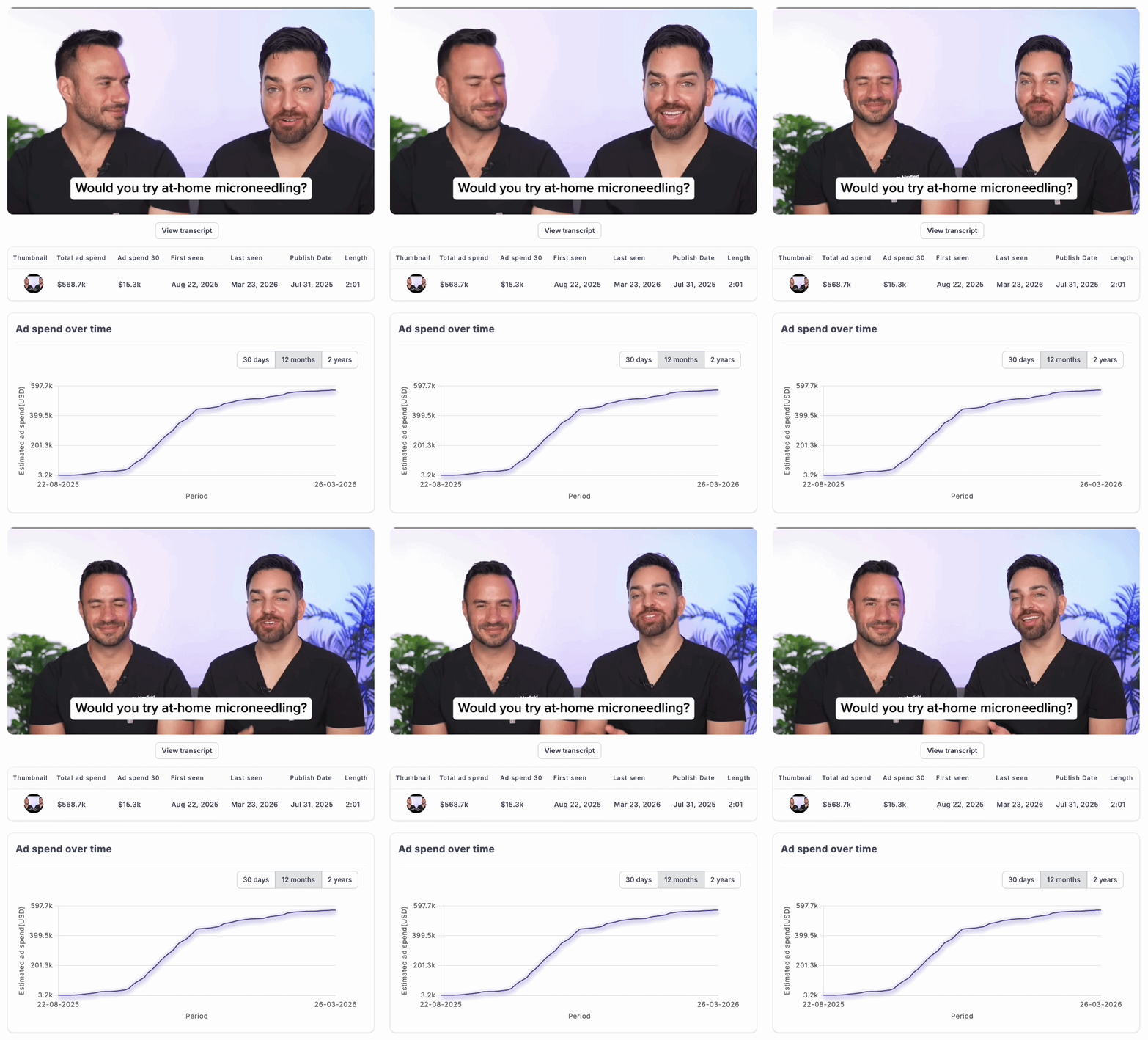
These are some of the elements this ad consists of:
🎣 Opening Hook
"Stabbing your face with needles sounds terrifying, but here's a reason why you may want to do this."
Textbook pattern interrupt — leads with the viewer's worst-case interpretation of the product, then reframes it as something worth considering. The word "stabbing" is deliberately extreme; it names the fear at maximum intensity so the rest of the ad can walk it back.
By the time the product is introduced, the viewer is already leaning in.
🏥 Authority Establishment
Two men in "Dr. Maxfield Dermatology" scrubs, clean clinical background, professional lighting. No intro, no credentials stated — the visual context does all the work.
The dual-doctor format is particularly smart: one leads, one validates, creating the conversational dynamic of a real consultation rather than a scripted pitch.
📋 Benefits Stack
"Fine lines, wrinkles, tone, texture, and elevates all your other ingredients."
Broad benefit coverage — hits every major aging concern in under 10 seconds. "Elevates all your other ingredients" is a clever addition that makes Qure feel synergistic with the viewer's existing routine rather than replacing it, lowering the perceived commitment to try.
🛡️ Objection Demolition Sequence
This is the structural centerpiece of the ad — a Q&A format that walks through every barrier to purchase:
Is it painful? → "Two out of 10." Specific, relatable, honest.
Is it safe? → "Finer than human hair, 0.5mm deep." Technical specificity builds clinical credibility.
How much time? → "Five minutes, once every two weeks." Removes the effort objection entirely.
Will it actually work? → "Give it 2 months." Sets realistic expectations, which paradoxically increases trust.
Naming objections out loud before the viewer raises them is one of the most powerful trust-building mechanics in direct response. This ad does it four times in a row.
⚔️ Competitor Takedown
"What you don't want to do is dermaroll at home. This is where you're dragging needles over the skin. That is going to rip your skin up. This is archaic and kind of violent."
The dermaroller is never named as a competitor — it's positioned as a category mistake. "Archaic and violent" is punchy, memorable framing that makes anyone who was considering a cheaper alternative feel like they dodged a bullet.
Qure doesn't have to say it's better — it just has to make everything else sound worse.
💰 Offer Close (end card)
"Shop now & save 43% on the 3-month supply. 50,745 reviews."
The 3-month supply framing is smart — it anchors the viewer to a commitment window that matches the "give it 2 months" timeline mentioned in the ad. The discount and review count handle the final price and social proof objections simultaneously. Clean, efficient close.
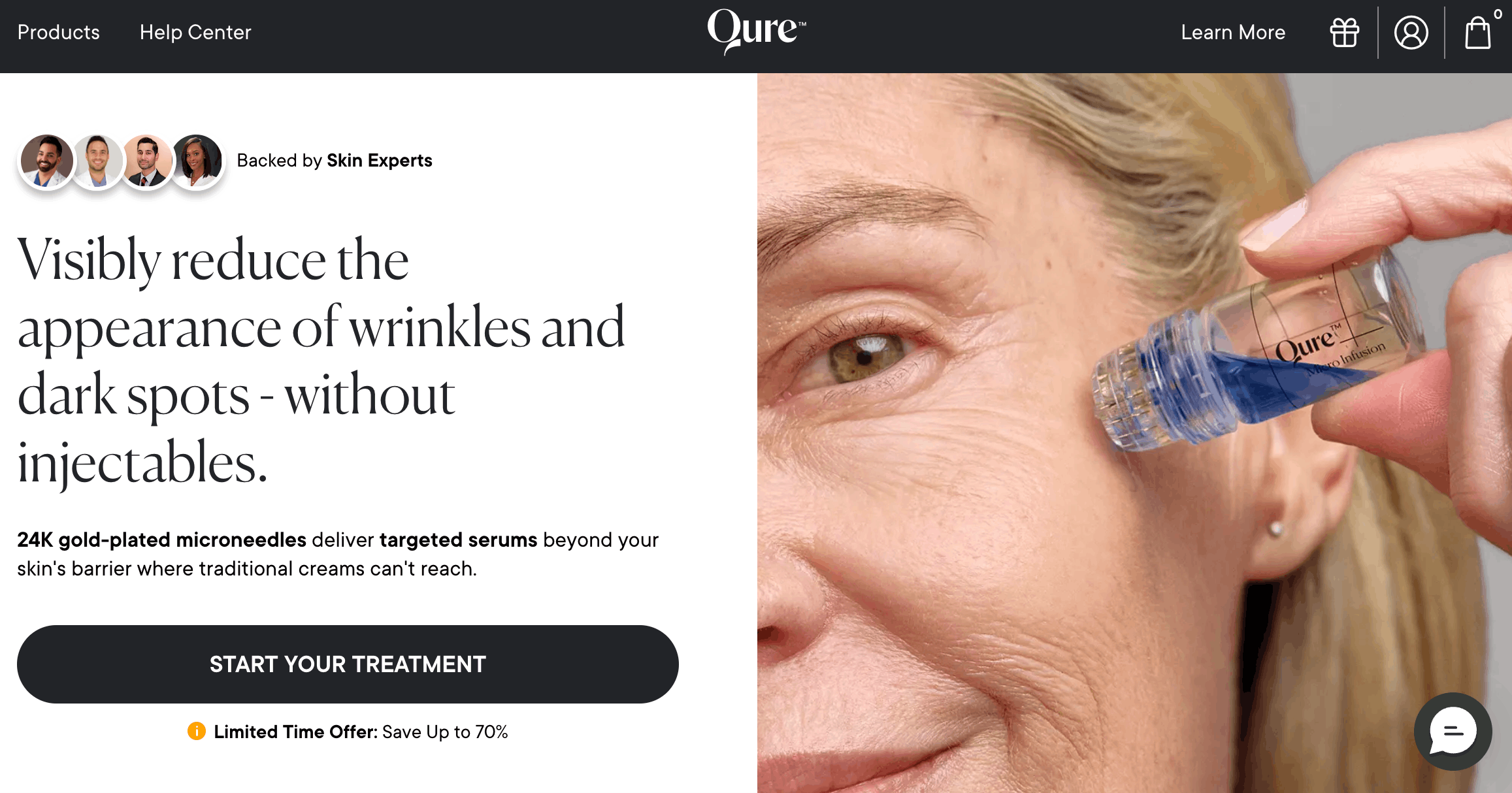
Here’s what this advertiser’s landing page looks like:
📈 Important takeaways
1️⃣ Lead with the fear, then reframe it — naming the viewer's worst interpretation of your product and walking it back is more powerful than pretending the fear doesn't exist
2️⃣ Structure the middle as an objection Q&A — every concern addressed in sequence removes purchase blockers one by one before the CTA lands
3️⃣ Dual authority doubles credibility — two experts agreeing feels like a consensus, not a pitch
4️⃣ Contrast selling is more effective than feature selling — making the competition look "archaic and violent" does more than listing your own benefits ever could
5️⃣ Match your offer timeline to your results timeline — "3-month supply" landing right after "give it 2 months" feels intentional and trustworthy, not arbitrary
6️⃣ Specific numbers beat vague claims — "0.5mm," "two out of ten," "five minutes," "50,745 reviews" all do more persuasive work than any adjective could
~ update from our friends at Funnel of the Week ~
Air Fryers, ‘Dark Posting’ & Category Creation for
a $4B Market
Our friends at Funnel of the Week just released a new funnel breakdown…
…This time it’s a DTC beauty brand using dark posting + smart benefit repositioning to turn a decades-old niche product into a mainstream hit.
The product? Shampoo bars. The angle? No longer “eco-friendly” - now it’s hair transformation stories like:
“My hair grew 4 inches in 2 months”
“Finally found the solution for my thin, lifeless hair”

And the growth opportunity is huge:
US shampoo bar market: $4.13B, growing 7.7% annually
Only 35% of consumers know this category exists
Only 8% have tried solid shampoo bars

Inside this breakdown, you’ll see:
✓ All “dark post” influencer accounts running now - and how they target different demos
✓ Creative strategy that shifts from eco benefits to personal transformation
✓ The awareness stage moves that take someone from “never heard of it” to “ordering today”
✓ How this exact framework has created billion-dollar markets before (electric toothbrushes, plant-based meat, and more)
💣 Ad by Replit with over $1.2M in ad spend
Next up - this cool ad by Replit we found inside VidTao:
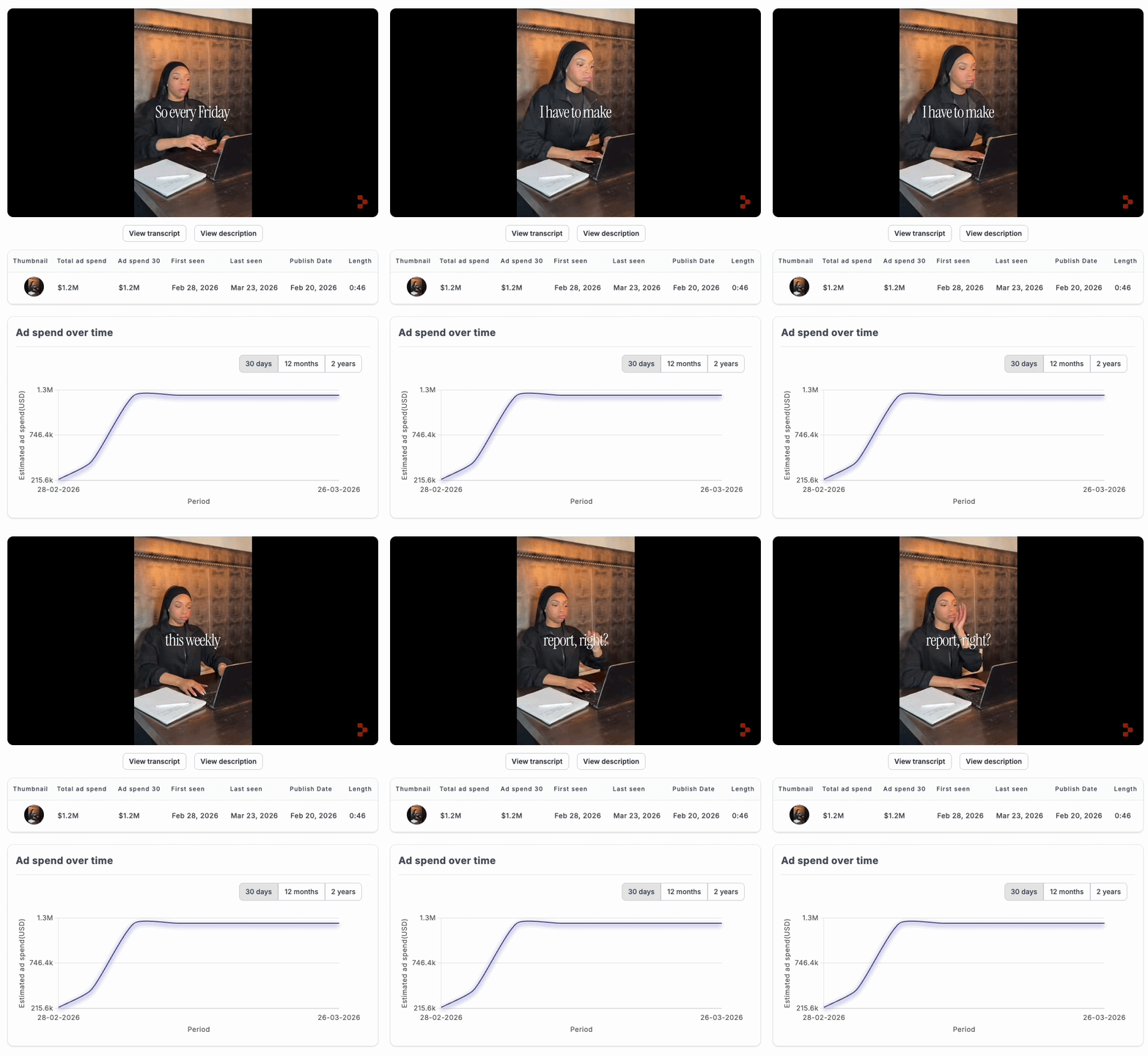
This ad’s estimated ad spend is over $1.2M! 💰
We dissected it, and these are some of the elements that make this ad work so well:
🎣 Opening Hook
"Imagine getting back 4 hours every single week."
No product name, no category, no setup — just a number and a feeling. The hook works because it's aspirational but grounded. "4 hours" is specific enough to feel real, significant enough to feel meaningful.
"Every single week" adds the compounding effect — the viewer naturally multiplies it by 52 without being asked to.
😤 Pain Establishment
"Pull the numbers from six different sheets. Build the deck. Send it out. 4 hours gone."
The Friday report scenario is one of the most universally relatable knowledge worker pain points in existence. The staccato delivery — short punchy phrases — mirrors the tedious repetitiveness of the task itself. "4 hours of zero progress on anything that actually matters" is the emotional gut punch: it's not just time lost, it's meaningful work sacrificed for admin.
🤩 Discovery Moment
"This week I tried Replit and dude, it is wild."
"This week" makes it feel current and personal. "Dude, it is wild" is the language of genuine surprise, not scripted enthusiasm.
The result — a live dashboard that auto-updates every week — is delivered before any explanation of how, which is the correct order: show the dream, then explain the path.
🚀 Breadth Expansion
"Slides, apps, dashboards, automations. Everything in one place."
After solving one specific problem, the ad zooms out to signal that Replit can solve the viewer's version of the problem too. "No bouncing around between a million different tools" targets tool fatigue — a pain point that's become increasingly acute for the target audience. One line, multiple buyer personas reached simultaneously.
📲 CTA
"That task you're already thinking about — go to replit.com. Describe it."
Exceptional CTA construction. "That task you're already thinking about" assumes the viewer has been mentally mapping the product to their own workflow throughout the ad — which they almost certainly have. It doesn't create a use case; it activates one already forming.
"Describe it" makes the first action feel effortless — no signup friction, no technical barrier, just describe what you need.
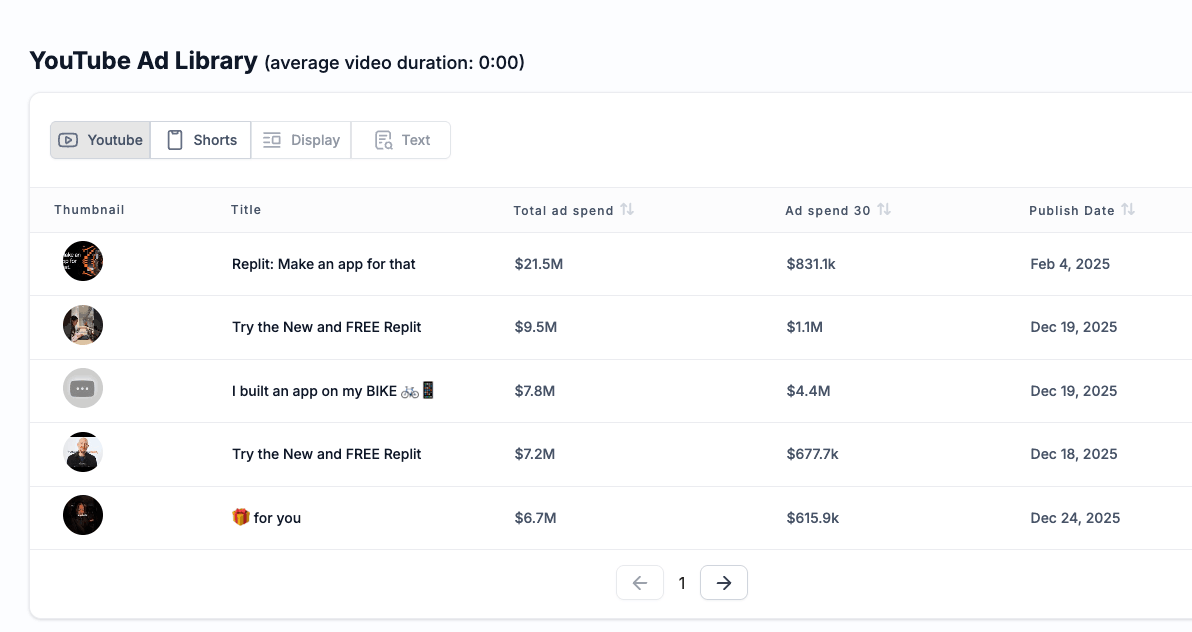
Not only that this is worth modeling after, but this advertiser also has many other cool ads, with millions in ad spend! Don’t miss out:
📈 Important takeaways
1️⃣ Quantify the pain before naming the product — "4 hours every week" creates desire for the solution before the solution exists in the viewer's mind
2️⃣ Specificity in the pain scenario is more persuasive than specificity in the product — six sheets, Friday report, build the deck lands harder than any feature list
3️⃣ Show the result before the mechanism — live dashboard that auto-updates is the dream; how Replit builds it is secondary
4️⃣ Breadth sells after depth hooks — nail one specific use case first, then expand to signal broader applicability
5️⃣ Assume the viewer has already made the mental connection — "that task you're already thinking about" is more powerful than "think of a task you could automate"
6️⃣ Casual language in B2B contexts disarms skepticism — "dude, it is wild" in a productivity ad does more trust-building than polished corporate copy ever could
💪 Men supplement bundle ad ($300k+ in ad spend)
Our last ad pick for this week is this ad for a men supplement bundle, check it out:
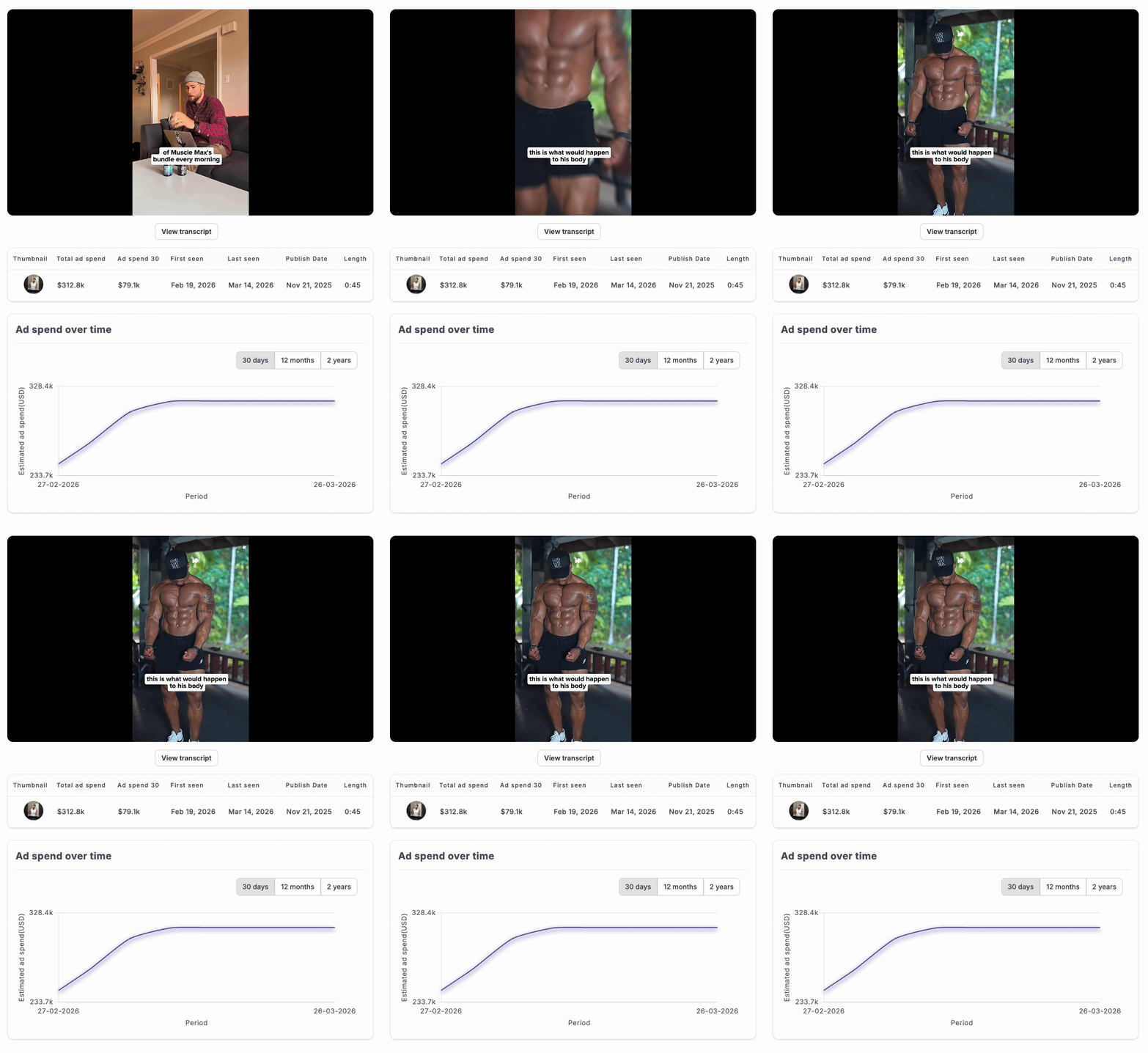
Now, these are some of the elements that make this ad work:
🎣 Opening Hook
"If a man ate only two capsules every morning, this is what would happen to his body."
The hypothetical framing is doing something clever — it removes the sales context entirely. This isn't "here's what our product does." It's "here's what would happen." The viewer becomes a passive observer of a body experiment rather than a target of a pitch.
Combined with "only two capsules," it signals effortlessness — the transformation costs almost nothing in effort.
😏 Day One: The Provocative Lead
"He would already notice he has grown a third leg."
Leading with the sexual benefit is a calculated risk that pays off — it's the highest-attention benefit for the target demographic, delivered as humor to bypass embarrassment. "Mr. P" keeps it just clean enough for platform moderation while landing the point unmistakably.
The 3D anatomical animation adds pseudo-scientific visual weight to an otherwise jokey claim.
💪 72 Hours: Testosterone & Brain Fog
"Testosterone levels would skyrocket... unlocking 100% of his whole human potential."
"100% of his whole human potential" is an extraordinary claim delivered with complete confidence. The brain fog benefit quietly broadens the product's appeal beyond gym-goers to any man feeling mentally sluggish — a massive secondary audience. The 3D glowing body visual makes the absorption claim feel tangible rather than abstract.
✨ One Week: Skin Clarity
"Clear glowing skin as Muscle Max's bundle kills the bacteria that allow acne to survive."
Smart benefit addition — acne and skin clarity skews the audience younger and adds a vanity hook to what's otherwise a performance product.
"Kills the bacteria that allow acne to survive" sounds clinical and specific without citing a single study. The phrasing does the work of science without any of the accountability.
📦 Ingredient Stack
"Shilajit, ashwagandha, sea moss, panax ginseng, and 15 other potent ingredients."
Naming four trending ingredients and then adding "15 other potent ingredients" is a quantity signal — this feels like an overwhelming value stack.
Each named ingredient carries its own cultural credibility in male wellness communities, so the list functions as social proof by ingredient association rather than by clinical evidence.
💰 Offer Close
"Buy one get one free deal."
Clean, simple, zero explanation needed.
BOGO is the most psychologically satisfying offer structure in supplements because it feels like the brand is absorbing the risk.
📈 Important takeaways
1️⃣ Hypothetical framing removes the sales barrier — "what would happen if" is less resistible than "here's what our product does"
2️⃣ Lead with the highest-attention benefit first — even if it's provocative, getting the viewer to keep watching is the only job of the first 3 seconds
3️⃣ Timeline structure creates narrative momentum — Day 1 → 72 hours → 1 week turns a feature list into a story with a beginning, middle, and end
4️⃣ Breadth of benefits maximizes audience overlap — hitting testosterone, brain fog, blood flow, and skin in one ad means four different men all feel spoken to
5️⃣ Trending ingredient names carry borrowed credibility — ashwagandha and sea moss have cultural cachet in wellness spaces that does persuasive work without clinical proof
6️⃣ BOGO is still the cleanest value close in supplements — no math, no skepticism, just instant perceived value
🕵️ Want to “Spy” on over 34.3 million YouTube ads (and landing pages)?
Go here to claim your free trial of the VidTao Premium YouTube Ad Library👇
That’s all for this week, folks! 🚀
We hope this week’s selection of high-performing ads has sparked new ideas to test yourself!
Want more insights like these?
Stay tuned for next week’s VidTao 3 Ad Thursday, where we’ll continue breaking down winning strategies from the best YouTube ads in the game!
And btw… If you have questions about YouTube ads?
Go here to schedule a free chat with our friends at Inceptly. Inceptly is a top Direct Response video ad agency, specializing in high-performing YouTube ad creatives & media buying.
Have a great week!
PS - Go here to Claim Your Free Trial of VidTao Premium: Access 34.3 Million YouTube Ads & Their Landing Pages!
PPS - Are you spending $1k/day+ on Paid Ads? 👉 Go here to set up a free YouTube Ad brainstorm chat.