- VidTao
- Posts
- 🩹😬 Salt in the wound first, solution second: Ads that rely on insecurities to sell
🩹😬 Salt in the wound first, solution second: Ads that rely on insecurities to sell
✌️ [2 Shorts Tuesday] Breaking down our favorite YouTube Shorts Ads Scaling Now

VidTao
March 18, 2026
Want to see some YouTube Shorts ads that are scaling right now?
You’re in luck…
Because today is 2 Shorts Tuesday. Why YouTube Shorts ads?
Because YouTube Shorts ad inventory is only going to keep growing:
5 Reasons Why More Creators Are Choosing YouTube Shorts Instead of TikTok
#1 - 💰 MORE MONEY 💰
YouTube made it easier to earn money with YouTube Shorts in 2024 by letting creators take a cut of ad money from their Shorts—a better deal than TikTok’s confusing payment system.

This works for both short videos and regular YouTube content, making it safer for creators who want steady income.
#2 - ⛔TikTok Ban Rumors/Reality⛔
Rumors (and a quick reality) of a TikTok ban in the U.S. made many creators start posting on YouTube Shorts just in case. YouTube even let Shorts videos be 3 minutes long starting October 2024, copying TikTok’s style while giving creators more flexibility.
YouTube’s Big Advantages
#3 - 📈Built-in audience📈
Shorts get boosted by YouTube’s recommendations and trending lists, helping creators grow faster. TikTok doesn’t connect as well to other apps or longer videos.
#4 - 🆕Different viewers🆕
YouTube’s users are often older (25-34) vs. TikTok’s teen-heavy crowd, so creators can reach new fans.
#5 - 🤦♂️Creators Are Fed Up With TikTok🤦♂️
Many say TikTok’s rules change too often, and they’re tired of worrying about bans. YouTube feels more stable, especially with Google’s support for targeting the right audiences. The 3-minute Shorts also let them tell better stories without switching apps.
…And critically, most DTC & Direct Response advertisers are still under-leveraging YouTube Shorts as an ad placement.
(and the upside is huge)
So, what are some ways you can succeed with YouTube Shorts ads?
Let’s take a closer look at 2 YouTube Shorts ads doing well right now:
The tracking metric you've never heard of that 4x'd a $750M business 📈
99% of DTC Subscription brands miss this
Duolingo was stuck in 2018.
Yes, $750M in revenue & 40 million+ daily users…
But growth?
Flatlining.
Hundreds of tests running… Nothing moving the needle.
They were trapped optimizing metrics everyone tracks: conversion rates, retention rates, acquisition costs.
Then they used a framework that flips traditional tracking on its head…
…exposing the ONE metric that mattered most...
…buried in every DTC subscription brand's biggest blind spot.
When they tested it against everything else — new user acquisition, reactivation campaigns, onboarding flows — this one metric had 10x more impact than all of them.
The result?
4x growth.
Not from better ads. Not from new traffic sources. Not from a rebrand.
From tracking one transition that 99% of subscription brands completely ignore.
Want to see how you can uncover your DTC subscription business’s “magic metric”?
VidTao Co-Founder Brat Vukovich just wrote an article inside his weekly newsletter, The Dashboard, walking you through exactly how to dig into your own subscription business and uncover this golden insight.
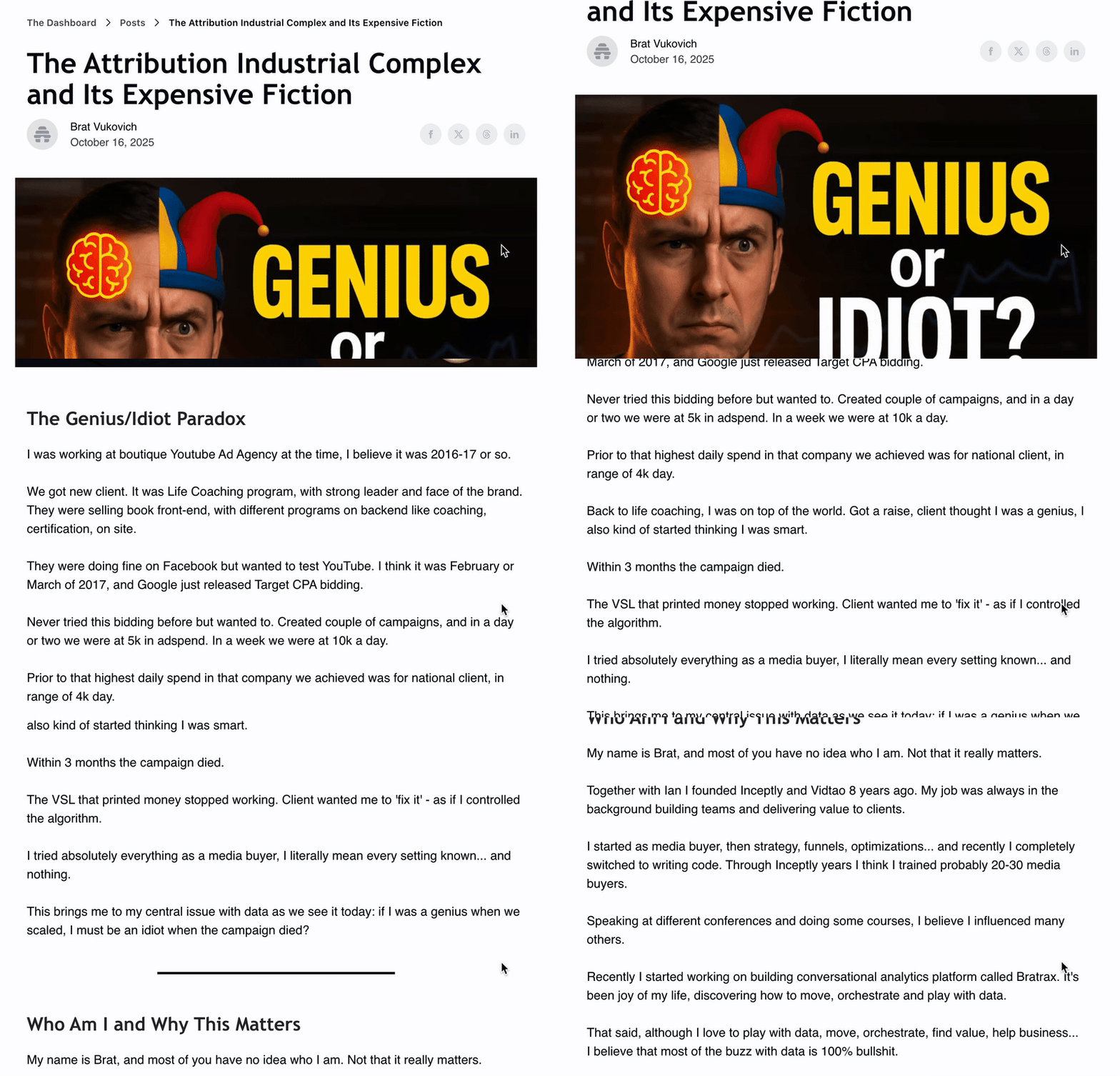
PS — The Dashboard is where Brat shares weekly notes on building Bratrax, buying media, and making sense of performance data - without the fluff.
PPS — Send this link to a friend who needs it: blog.bratrax.com
👟 Ad 1: Highpads / Brandone: "Get Her to Forget Her Exes"
Let’s watch our first ad pick for this week together:

The ad opens on street footage of a shirtless, jacked guy walking past a couple - the implication unmistakable.
From there, a voiceover builds a methodical, almost clinical case for why your girlfriend has probably dated taller men, why that matters, and why regular insoles won't fix it.
Then, the product appears: Highpads 1.0, developed by orthopedists, pitched to Shark Tank investors, trusted by 48,000 people.
The emotional journey runs from insecurity → social proof → solution → urgency, all in under a minute. 📏
Why this ad works:
🧠 It opens on a feeling, not a fact: The first frame isn't about the product or even height — it's about her exes. That's the specific fear being activated. Not "you're short" (generic), but "she's been with taller guys and she knows the difference" (targeted and personal). The more specific the insecurity, the harder it lands.
📊 The statistics give permission to feel the thing: "The average male height worldwide is five feet seven inches, but for some ethnicities it's six feet." This is ostensibly informational — but its real function is to make the viewer's anxiety feel legitimate and grounded in data. You're not being irrational. The numbers back you up.
🦈 The Shark Tank reference is a credibility grenade: "Even pitched to the Sharks. The founders were so confident they decided to launch it alone." In two sentences, the ad implies venture-level validation, founder conviction, and a product that was good enough for national TV. None of this requires proof — the cultural weight of Shark Tank does the work automatically.
🔬 "Developed by top orthopedists" flips insoles from vanity to wellness: Without this line, height insoles feel like a vanity purchase — something you'd be embarrassed to admit buying. Framing it as orthopedist-developed and posture-improving repositions it as a health decision. The buyer gets to feel smart, not insecure.
⏰ "40% off ending tomorrow" is a classic close — but notice the sequencing: The urgency only arrives after the emotional and social proof work is done. Most amateur ads lead with the discount. This one makes you want the product before offering you the escape hatch.
Creative beats to swipe:
Don't just identify the pain — name the specific social version of it (not "you're short," but "her exes were taller").
Use statistics to validate the emotion, not just to inform.
Reference a credibility institution your audience already trusts — Shark Tank, a university, a regulatory body — even briefly.
Reframe the vanity purchase as a functional/health decision to remove purchase shame.
UGC grid of real men holding the product — diversity of faces and body types broadens identification.
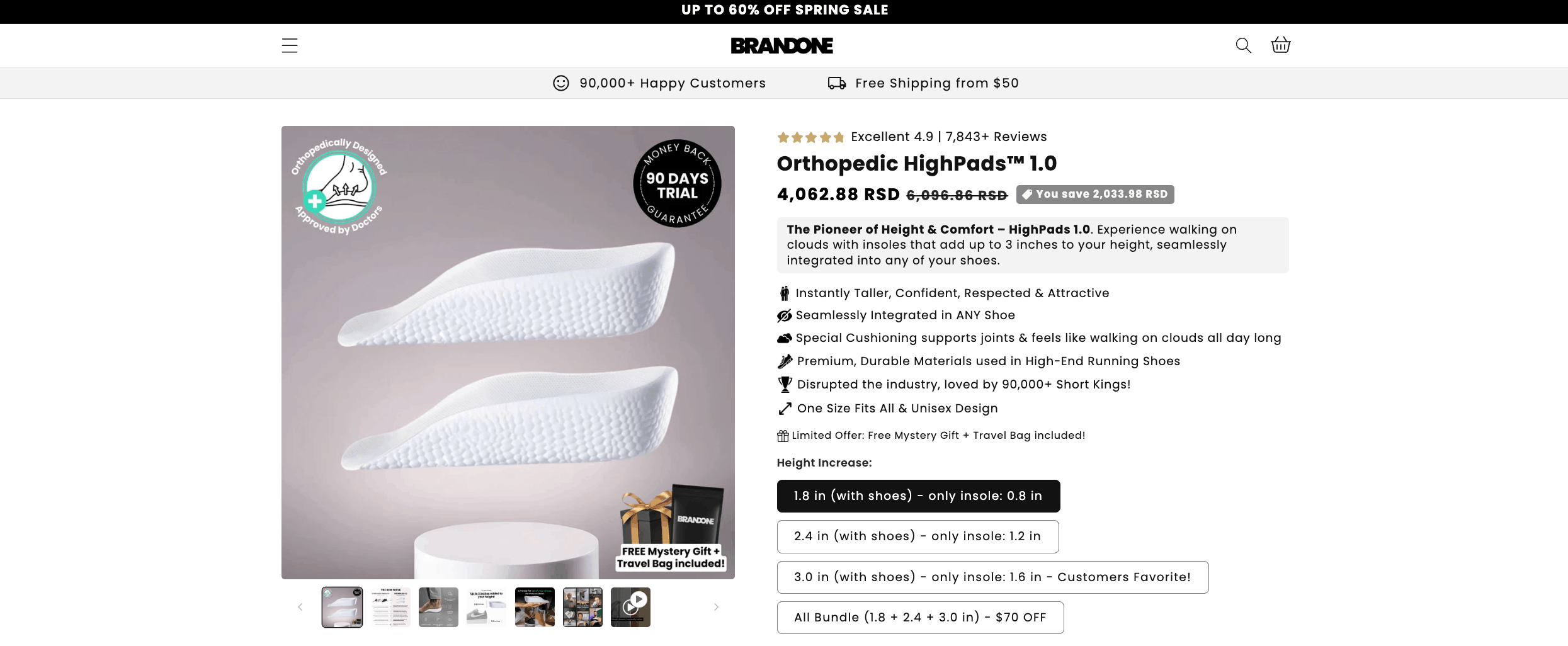
Additionally, here’s what this ad’s landing page in use looks like:
~ update from our friends at Funnel of the Week ~
Air Fryers, ‘Dark Posting’ & Category Creation for
a $4B Market
Our friends at Funnel of the Week just released a new funnel breakdown…
…This time it’s a DTC beauty brand using dark posting + smart benefit repositioning to turn a decades-old niche product into a mainstream hit.
The product? Shampoo bars. The angle? No longer “eco-friendly” - now it’s hair transformation stories like:
“My hair grew 4 inches in 2 months”
“Finally found the solution for my thin, lifeless hair”

And the growth opportunity is huge:
US shampoo bar market: $4.13B, growing 7.7% annually
Only 35% of consumers know this category exists
Only 8% have tried solid shampoo bars

Inside this breakdown, you’ll see:
✓ All “dark post” influencer accounts running now - and how they target different demos
✓ Creative strategy that shifts from eco benefits to personal transformation
✓ The awareness stage moves that take someone from “never heard of it” to “ordering today”
✓ How this exact framework has created billion-dollar markets before (electric toothbrushes, plant-based meat, and more)
🧠 Ad 2: Wisey: "The Smart Guy Who Does Nothing"
Here’s our second ad pick for the week:
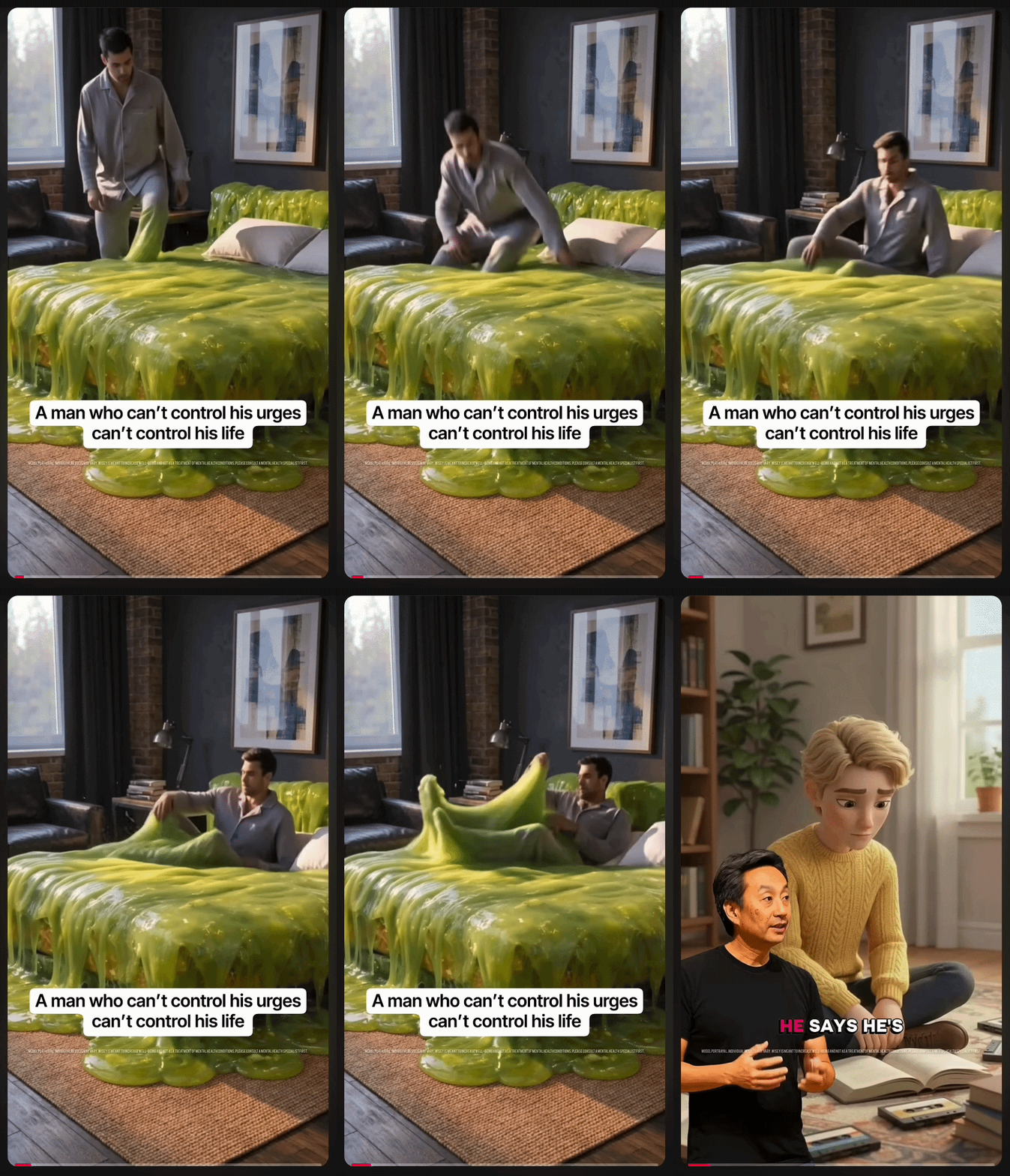
The ad opening is a trending AI-generated "weird bed" clip — slime, chaos, a man getting in it.
The visual metaphor for being trapped is established before a single word is spoken.
An AI narrator backed by animated visuals, delivers one of the most forensically accurate breakdowns of high-functioning self-sabotage you'll find in a short-form ad.
The CTA isn't "buy" — it's "take a quiz." The product sells itself by making the viewer feel described, not pitched to. 🧩
Why this ad works:
📱 The trending visual hook is a borrowed attention strategy: The AI slime bed format was already circulating as entertainment content before this ad existed. By opening with a recognisable trend, the ad disguises itself as native content for the first two seconds — long enough to get past the skip reflex. By the time the viewer realises it's an ad, the hook has already landed.
🎯 The character portrait is unnervingly accurate: "He overthinks, overplans, and underacts. He's tired, but can't rest. Resting feels like losing." This isn't marketing copy — it's a therapy intake form. The precision of the description creates a mirror effect: the viewer isn't being sold to, they're being seen. And that feeling is more compelling than any feature list.
🔄 "Scared not of failure, but of what happens if he actually wins" is a reframe that stops scrolls: Fear of failure is a well-worn concept. Fear of success is rarer, more counterintuitive, and hits harder precisely because it's unexpected. Any viewer who recognises themselves in that line has just been handed a new framework for understanding their own behaviour — and Wisey is the answer to that framework.
🏷️ "CBT-based" is a credibility signal aimed at the exact audience: The target — high-IQ, self-aware men — would be skeptical of vague "mindset coaching." CBT (Cognitive Behavioural Therapy) is a specific, clinically recognised methodology. Naming it signals that this is a system, not a vibe. It's the equivalent of saying "orthopedist-developed" in the first ad — it moves the product from lifestyle to legitimate.
🎮 The quiz CTA is a genius friction reducer: "Take a quiz" is a micro-commitment that feels like entertainment, not a purchase. It's a funnel entry point disguised as self-discovery. By the time the viewer finishes the quiz, they've invested time and received a personalised result — making the paid product feel like the logical next step rather than a cold sell.
Creative beats to swipe:
Open with a trending format your audience already recognises — borrow existing scroll momentum.
Write your customer avatar description so accurately they feel described, not targeted.
Lead with the counterintuitive version of the pain ("fear of success, not failure") — it creates novelty in a crowded space.
Name a clinical or academic methodology to add legitimacy — it converts the skeptical buyer.
Replace "buy now" with a quiz or assessment CTA — lower friction, higher funnel entry rate.
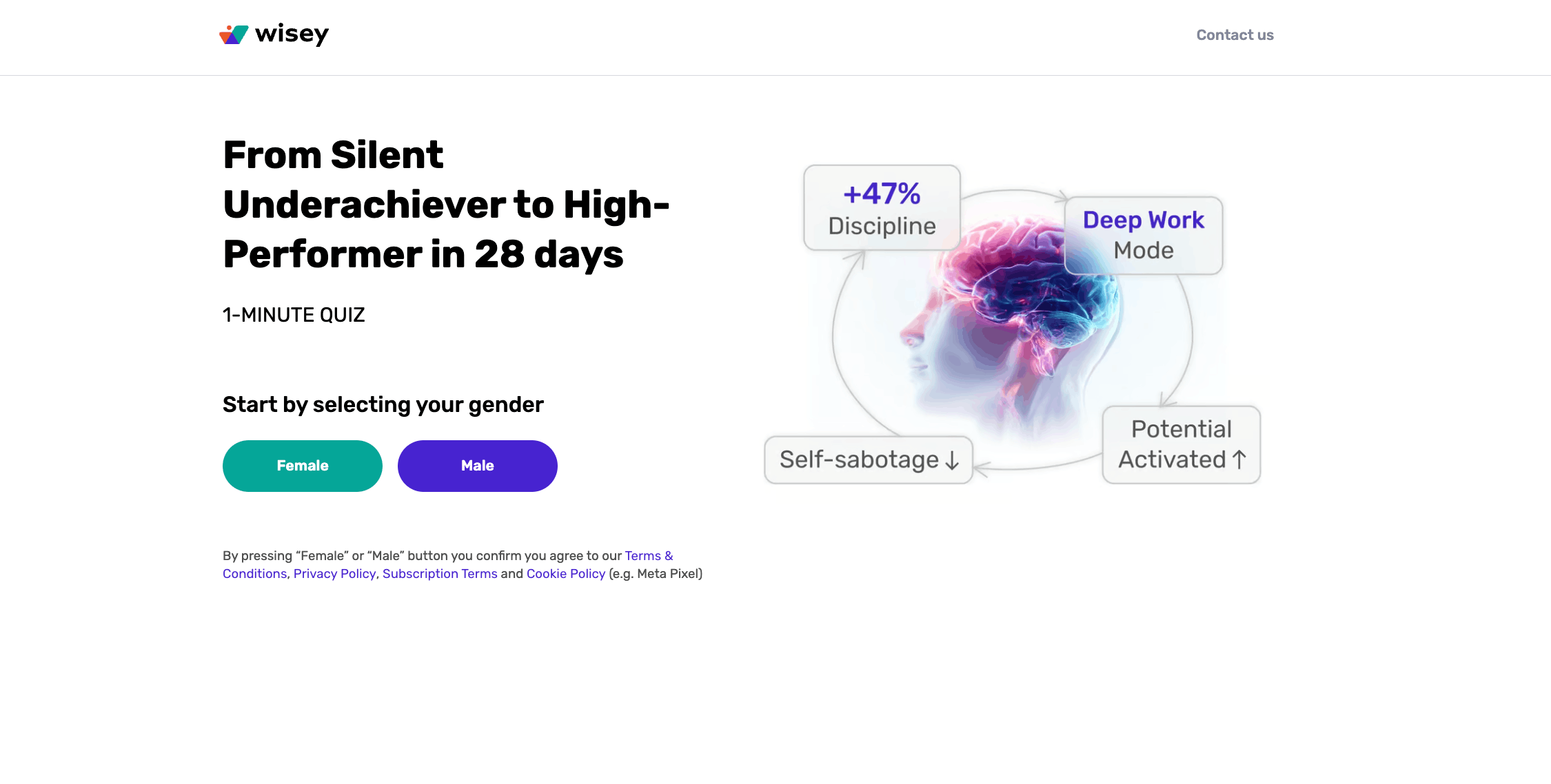
To finish off with, here’s a quick look at Wisey’s landing page as well:
🕵️ Want to “Spy” on over 34.4 million YouTube ads (and landing pages)?
Go here to claim your free trial of the VidTao Premium YouTube Ad Library👇
That would be all for this week! 🚀
We hope this week’s selection of high-performing YouTube Shorts ads has sparked new ideas to test yourself!
Want more insights like these?
Stay tuned for next week’s VidTao 2 Shorts Tuesday…
…where we’ll continue breaking down winning YouTube Shorts Ads you can break down + model for your own creatives & campaigns.
And btw… If you have questions about YouTube ads or YouTube Shorts ads in particular?
Go here to schedule a free chat with our friends at Inceptly. Inceptly is a top Direct Response video ad agency, specializing in high-performing YouTube ad creatives & media buying.
Have a great week!
PS - Go here to Claim Your Free Trial of VidTao Premium: Access 34.4 Million YouTube Ads & Their Landing Pages!
PPS - Are you spending $1k/day+ on Paid Ads? 👉 Go here to set up a free YouTube Ad brainstorm chat.